Untitled-5
Showing posts with label Warehouse Management System. Show all posts

Friday, 1 May 2015

Unsaleable - Reducing the Cost of Damaged Goods

Even with improvements in packaging, shipping practices, warehouse design, and software, cutting the cost of unsaleable products is the constant challenge for those in the grocery industry. According to the June 2005 issue of Occupational Health, the Food Marketing Institute estimated that the grocery industry sustains nearly $20 billion annually in damaged merchandise.

For Mead/Westvaco Coated Board in Stanford, Connecticut, the challenge translates into developing packaging material that better protects frozen food. Both Mead-Westvaco and Genco in Pittsburg, Pennsylvania, conducted a study to track frozen food products from the point of manufacturing to the supermarket shelf. Evaluating paperboard strength, the study concluded that more paperboard compression-strength would be better. The study also revealed that most package damage occurs after the product reaches the store loading docks.
The H.J. Heinz Company identified that product damage even begins when a product is handled by the lift truck. 

Companies seeking to reduce damaged good must evaluate every stop a product makes in the supply chain. And as companies such as Mead/Westvasco determine that a larger box will increase protection, they must also make sure that the elevator can still accommodate the case from the factory to the warehouse. Companies must also observe how the product is handled at customer locations, as stores utilize varying types of equipment to move product. Retailers also unaware that the case size has expanded to improve its protection could cause damage to the product when placed in a rack.
A move to a cross-dock facility with separate picking and receiving areas has reduced much of the internal damage to products for Dunkin Donuts. The new, roomier facility cut down on congested traffic flow, which has also reduced product damage. A dedicated pick and putaway aisles that separate lift truck traffic from pick traffic. Product is stored off the floor on pallet flow rails, away from lift truck traffic. In an effort to track outdated goods and available shelf life, the company also uses a warehouse management system with barcodes. The software checks that items picked have adequate shelf life when they are received at the store.

Mitchell Grocery in Albertville, Alabama, is a wholesale grocery distribution center serving more than 250 independent supermarkets in the Southeast. It distributes more than 20,000 items, including fresh meat, produce, dairy, ice cream, and deli-bakery items, to name a few.
Based on its volume, the cost of unsaleables at Mitchell's can be significant. Each day, Mitchell Grocery ships 80 truckloads and delivers 500,000 cases per week. About half of the outbound product is perishable. One-quarter percent to one-half percent of sales goes back to the manufacturer.

The company was able to reduce its unsaleable cost by installing Voxware's VoiceLogistics, a voice-enable logistic operation. The technology has allowed the company to reduce its miss-picks from four per thousand to two per thousand. The system confirms location and item, dramatically reducing inaccuracies.

When it comes to reducing the cost of damaged goods, some challenges don't call for high-tech systems or indepth studies. Of the $20 billion lost annually in the grocery industry alone, 30 percent was caused by careless box cutting. Product damage from box cutters translates into unsaleable goods, and the high costs associated with product returns is an issue also faced by industries including fulfillment, catalog, and pharmaceutical industries.

As many workers never report minor injuries produced by inappropriate knife use, an estimate of injuries is not available. However, businesses which have instituted safety-knife programs in their stores and warehouses report huge annual savings. According to the same June 2005 Occupational Health article, a 300-store retail chain can save $5-10 million per year with these types of programs. Savings come in the form of reduced injury claims and from fewer incidences of damage to stock.

The use of safety procedures and the correct tools are inherent to program focused on reducing unsaleables. While there's no substitute for well-trained workers, there's also no substitute for safety knives that have been developed with safety features which can be used even by untrained workers.

Bossini Advances Its Supply Chain Strategy With the WebMethods ESB

To keep ahead in a fast-moving industry, leading Asia-Pacific fashion retailer Bossini needed to have better visibility into its business and operational processes through the synchronization of real-time data across multiple orders, shipments and stock-keeping units.
By leveraging the Enterprise Service Bus (ESB), Bossini is able to speed up the deployment of new applications and processes and bring new partners on board much more quickly.

The intuitive development environment of the webMethods ESB has enabled Bossini's programmers to easily, and quickly, build the large number of interfaces required to meet its complex integration requirements.

Upon transforming to a Service Oriented Architecture (SOA), Bossini could synchronize real-time data from multiple orders, shipments and stock-keeping units (SKUs) across its Point-of-Sale (POS) systems and Warehouse Management System (WMS) inventory.

Benefits include:
• Better visibility into real-time processes with dynamic synchronization of data between point of sale and warehouse management systems

• Additional business capabilities, e.g. late shipment and sales performance monitoring via dashboards/SMS and stock-on-hand monitoring for all markets.

• Factory order allocation reduced from three days to one

• Finance month-end closing slashed from 25 days to seven

• Developer and IT productivity increased by up to 30 percent through user-friendly intuitive interface and re-use of programming objects from the webMethods ESB.

A standards-based solution
With the webMethods Enterprise Service Bus, Bossini is able to take full advantage of the standards-based interfaces to integrate with their existing systems and utilize service orchestration to connect their existing systems to their processes. This allows Bossini to speed up the deployment of new applications and processes and bring new partners on board much more quickly.

Subsequent changes are also easier to implement, and the company enjoys cost savings resulting from the re-use of the service components. "The webMethods ESB enables us to achieve real-time interoperability across numerous disparate applications, including independence from the constraints of their operating systems and hardware platforms," said Mr. Andrew Ling, Director of IT and Supply Chain of the Bossini Group.

Of equal importance is the platform's flexibility and ease of use. "This was crucial in our ability to gain competitive advantage in the fickle world of apparel retailing," said Ling. "In our decision, we also took into account the faster adoption, lower training costs and quicker return-on-investment enabled by the very intuitive design of the webMethods ESB."

Reverse Logistics within Ecommerce

It's no secret that a positive experience delivered to a customer determines whether that customer will come back. Retailers must enhance the user experience prior to pressing the "buy" button but also focus on the post-purchase site experience to keep customer retention metrics at satisfactory levels.
This is where many online retailers drop the ball; specifically with the processing and communication management of consumer returns. By incorporating new strategies to optimize this process, retailers can increase customer retention and add new revenue streams to the direct business.

Here are some key metrics to support the return optimization business case:
o 85% of customers say they will stop buying from a retailer if the returns process is a hassle (Harris Interactive)
o 95% of customers say that they will likely shop with a catalog or internet retailer again if the returns process is convenient (Harris Interactive)
o 40% of shoppers don't buy online due to returns difficulty (Jupiter Research)
o Customers who have their complaint resolved quickly have a re-purchase intention rate of 82% (McKinsey)

The increased importance of online returns
Returns are an inevitable fact of online retail. As the depth of online product categories became apparent in the last three years, the importance of online return policies became painfully obvious. Provide a bad returns experience and you undoubtedly reduce the chance of a customer coming back for a repeat purchase.

For example, sectors such as high-end apparel, consumer returns reach levels as high as 20% and an efficient returns process is critical to overall success. Quicker inventory cycles and fluctuating retail prices make it important to not only process the return effectively for the consumer, but also get it in the warehouse quickly for re-sale.

Reverse Logistics solve fundamental business problems
Retailers are now being proactive and turning these operational challenges into competitive advantages and incremental revenue streams. By investing in solutions that integrate key platform components and data, online retailers are able to offer self-service return capabilities to consumers.

A typical reverse logistics solution allows the consumer to more easily initiate the return by incorporating a pre-paid postage label within the box. This label can be integrated within the packing slip or it can be a separate stand-alone piece.

Because the label generation is initiated by the warehouse management system, the label is able to capture key customer information for tracking purposes, both for CSR's and the end consumer.

The label provides one primary source of value to the customer - convenience. No post office trip is needed and retailers improve overall customer satisfaction while facilitating the product return to the distribution center.

When consumers initiate returns through this process, retailers typically charge them a "handling fee". This fee is typically 20% higher than the postage charge that was provided by the reverse logistics service provider. This dollar spread, between what is charged to the customer and what has been billed to the retailer for postage, generates direct and measurable profits for retailers.

Improving communication with online consumers
A reverse logistics solution can drastically improve customer communication during the return process. Newgistics is a great example of a reverse logistics provider that has customer-centric communication processes embedded in their overall solution.
After a return package is picked up from a consumer location, it is sent to a Newgistics hub for sorting and re-locating. During this process, there are strategic scanning mechanisms used to facilitate triggered and branded communication emails.

A consumer receives "retailer branded" email notifications when certain milestones are achieved in the return process, such as:
o Return receipt

o (Ex. We have received your return and you should get a credit in the following days).
o Return Completion

o (Ex. Your return has been processed)

Quick receipt of these emails enhances the confidence level of customers, reduces inbound customer service calls, and provides another value-added feature to boost the eCommerce relationship.

Your company is taking a great risk if it does not provide a great post-purchase site experience. Feel free to contact Trinity to learn more about this type of initiative and how we can help in discovery, scope, and implementation efforts.

Do You Know What Is at the Heart of Your Supply Chain?

All too often businesses, from SMEs to major corporations, forget the importance of their warehouse operations as a critical part of the supply chain. The warehouse is often taken for granted and neglected in terms of investment and consideration within the overall supply chain strategy. The simple truth however, is that the warehousing operation within most businesses can be a key factor in either the success or failure of the supply chain. Quickly think out everything within the supply chain that impacts the warehouse operation, or that the warehouse operation has an impact on, and it will soon become apparent how important it is.

Consider the analogy that the warehouse in the supply chain is much like the heart in the human body.

The heart is just a pump, a complex and important one, yes, but still just a pump. It receives oxygen depleted blood from the body (raw material suppliers), pumps it out to the lungs (processing/production plant) and distributes oxygenated blood (finished goods) received from the lungs (processing/production plant) throughout the rest of the body - much like the warehouse receiving and distributing product from and throughout the supply chain.
Everyone knows that the heart is a vital organ; after all it pumps approximately 9,000 litres of blood around the body per day. However, as with all pumps it can become clogged, break down and need repair. This is why it is critical that we know how the heart works - as what is good or bad for it can significantly impact the risk for failure.

So in this analogy of warehouse and heart, why on so many occasions is so little time spent looking after either, usually until it is too late?
The answer is that the warehouse (heart) within the supply chain (body) is seen as a functional necessity that has to service the needs of the rest of the departments within the business (organs), whereas its own needs to operate properly are not considered as important and are often overlooked.

The reality is that the warehouse needs investment in equipment, processes, systems and resource (much like the heart requiring an independent supply of oxygen and nutrients) and a strategy to ensure this happens as other parts of the business change needs to be put in place.

Cutting the warehouse investment and expenditure budget as a means of cost cutting to increase business efficiency is a false economy which is repeated year after year. I am frequently told when visiting companies that to date the warehouse has not been a priority for them and that they have invested in all parts of the business except the warehouse, which is no longer operating efficiently nor meeting the needs of the business. 

On further inspection that same warehouse will probably hold too much inventory (including obsolete stock), will not have a fully functional Warehouse Management System (WMS), will have either out of date or no Standard Operating Procedures (SOPs), will have an out dated layout and more than likely have outdated handling equipment.These issues are a result of other parts of the business having investment and revised strategy to improve products, systems and operations without giving any thought to the impact on the warehouse, other than that it will have to cope with whatever is needed.

Remember; think of everything within the supply chain that impacts the warehouse operation, or that the warehouse operation has an impact on. For example; procurement strategy will have a direct impact on inventory holding (and therefore space requirements) and sometimes even the location of the warehouse; new product introduction will directly impact the type of inventory and could also directly impact the warehouse processes, layout, equipment and handling requirements; sales and marketing campaigns create seasonal peaks and directly impact the flow of product and therefore the resource requirements throughout the warehouse; and the most common of all being IT strategy to implement a new ERP system, which has limited or no WMS functionality and simply has a stock level function. Any of these examples can have a negative effect on warehouse performance and consequently a direct negative impact on order fulfilment and customer service levels being achieved.

The warehouse operations need to have visibility of the whole business and be part of the overall and on-going logistics and supply chain strategy, with cause and effect being identified with each change within the supply chain. However there is little or no point in integrating an out of date or inappropriate warehouse operation into the business strategy.
The starting point is to optimise your existing warehouse operations to meet the current and future needs of the business, in line with your growth projections. 

The key areas that need to have an established strategy are an appropriate warehouse and inventory management technique (to optimise workflow and costs); optimised target inventory (holding cost vs ordering cost vs service); optimised warehouse design/stores layout, handling practices and workflows; tactical stock location(s) and picking strategy; appropriate manual and/or automated Materials Handling Systems; a clear WMS operational requirement specification; a performance measurement strategy (and/or tool), to identify activity costs within the warehouse and customer service performance.

This may make you think that simply outsourcing your warehouse to one of the many third party providers would be an easier option to have as your 'instant' optimisation strategy. However, this is not the right approach if you do not understand your current warehouse operations and therefore warehouse requirements in detail. (Would you consider having an artificial heart before you were aware of all the facts and the options available to you?).

To outsource you must have a clear understanding of exactly what you are outsourcing, how to measure the performance of your provider and how the costs of outsourcing compare to the costs of running your own optimised warehouse. I am a keen advocate of outsourcing many warehouse and logistics operations and frequently do so for companies across the UK and Europe when it is appropriate and there is a clear understanding of the business needs with a clear strategy.

To develop a good warehouse strategy (whether in-house or outsourced) you will need to review your current operation and understand the type of operation you will need in the future as the business changes. This will include a full review of the following areas; the interface/interaction between warehousing and other operations/departments; product flows and volumes at SKU or family level; seasonal fluctuations for each product group; increased product lines and projected changes to product family type; product storage requirements, including number on pallets, outer packaging, cartons, SKU and items; goods in and put-away/stowage routines and picking, packing and despatch procedures; stock and inventory management requirements; inbound product profiles and handling requirements; customer service and delivery commitments and order cut-off times; stock and inventory data to determine stock levels and pick face layouts; returns handling and sortation operation; slow moving and obsolete stock policy; stock management system or WMS and reporting requirements; warehouse operational costs.

Once you have acknowledged that your warehouse is at the heart of your supply chain, combined with an understanding of how it should work, and subsequently implement a strategy to maintain its health and longevity; then the hard work is done.
Remember a business will rarely die of a broken heart, but the longer you take to address the cause of the heartache, the longer the negative impact and effects can last.

Warehouse Control Systems

Warehouse control systems (WCS) is a software application that directs the real-time activities within warehouses and distribution centers. As the "traffic cop" for the warehouse/distribution center, the WCS is responsible for keeping everything running smoothly, maximizing the efficiency of the material handling subsystems and often, the activities of the warehouse associates themselves. It provides a uniform interface to a broad range of material handling equipment such as AS/RS, carousels, conveyor systems, sorters, palletizers, etc. The primary functions of a WCS include:
  • Interfacing to an upper level host system/Warehouse management system (WMS) and exchanging information required to manage the daily operations of the distribution center.
  • Allocating work to the various material handling sub-systems to balance system activity to complete the requested workload.
  • Providing real-time directives to operators and material handling equipment controllers to accomplish the order fulfillment and product routing requirements.
  • Dynamically assign cartons to divert locations based on defined sortation algorithms or based on routing/order information received from the Host (if applicable).
  • Generate result data files for reporting and/or upload by the Host system.
  • Operational screens (graphical user interface) and functions to facilitate efficient control and management of the distribution warehouse.
  • Collect statistical data on the operational performance of the system to enable operations personnel to maintain the equipment in peak performance.
Each major function is designed to work as part of an integrated process to effectively link the host systems with the lower level control system, while relieving the Host from the real-time requirements such as operator screens and lower level equipment control interfaces
Key capabilities of a WCS systems should include relieving a customer host computer of managing a real-time material handling automation interface, maximizing system throughput and performance while utilizing the most efficient methods for pallet, case and item routing.

You may have read a recent story published by Modern Materials Handling Magazine that outlines how one of the industries most advanced Warehouse Control Systems helped Oriental Trading Company improve productivity, reduce labor costs and maximize order accuracy levels.

This WCS system is PC-based and are designed to handle all the physical aspects of a warehouse or distribution center, including material handling equipment control, stock location mapping, inter-location movement control, inter-zone routing, allocation of stock to dispatches, order management and dock door interface control, all within unlimited operator interface. Material handling equipment control includes control of cranes, trucks, conveyors, carousels, sorters and other equipment using network, radio or infrared communication links.

The WCS picking capabilities include support for various picking models, such as paper pick lists, RF terminals, goods-to-man picking robots, voice controlled and pick-to-light; support for fixed and dynamically assigned picking locations; automatic replenishment based on minimum level or future demand; picked container building to defined rules of height; weight and stock segregation; consolidation of pick requirements into waves' pick walk minimization; and configurable workload balancing.

This Warehouse Control Systems operates as self-maintained units requiring no user interaction for file and system maintenance, providing elaborate statistical and diagnostic graphics and reports for maximum systems uptime and recommending equipment maintenance based on run-time and/or maintenance schedules.

BENEFITS
· Maximizes Throughput & Performance
· Optimizes Material Flow
· Order Management
· Diagnostic & Statistical Graphics & Reports
· Sophisticated Productivity Tracking & Planning
· Real Time Interface to material Handling Equipment
· Universal Sub-System Support
· Relieves WMS/ERP of Real Time Decisions
· One Port Real Time Connectivity to ERP & WMS
· RFID Compatible
· Easy to Use Intuitive GUI/Windows Interface

4 Benefits of a Centralized Inventory Management System in a Multichannel eCommerce Platform

In a world of constant technological advancement, retail stores are going online, thanks to the ample scope and opportunities being offered by the multi-channel eCommerce. It has allowed the store owners to make their products visible across different market places and social media channels and thus increase the possibility of sales. However, in order to ensure effective management of products, these multi-channel eCommerce platforms need to have an effective inventory management system.
These multi-channel eCommerce platforms have a centralized inventory management system. The novel features of such an inventory system allow a client to derive the following benefits.

1. The Client can sell across all online sale-channels and that too from one single inventory. This feature brings about simplicity and empowers client to have proper control of it at a glance as well.

2. One-time Listing of Products - This feature provides clients with the much needed advantage of saving time, energy, repetitive work and manpower. Suppose a client of a retail store were to list his products in various marketplaces like eBay, Amazon, Snapdeal etc. He would have to list his products individually for each of the multiple channel marketplaces. The unique feature of a centralized inventory management system is that it also allows the client to list his product only once with the multi-channel eCommerce platform and then from the very multi-channel eCommerce solution, the clients products get 'pushed' or listed onto the various other marketplaces.

3. The inventory updates itself according to the sales taking place across the various channels in real time. For instance, if the client has a total of a 100 products, then these 100 products are displayed across the various multichannel marketplaces like eBay, Amazon, Snapdeal etc., uniformly. Now suppose there is a sale of 10 products in eBay, then the remaining stock amount displayed in eBay is 90. As the inventory updates itself in real time, the stock levels simultaneously displayed in Amazon, Snap deal and the other channels is also 90. Thus, there is no need to individually check into each of the stock content when they are already getting updated automatically in real time.

4. The client can effortlessly track the stock in multiple warehouses in different regions. Having the consolidated real time information of all the stock across different warehouses is not simple. However, that is exactly what a proper warehouse management system is built for. It is robust enough to consolidate all the data and yet sophisticated enough to streamline itself with the latest updates in the eCommerce and multiple channel eCommerce solutions.
Thus, the centralized inventory management system goes a long way in contributing to the efficiency and success of a multichannel eCommerce platform.

Monday, 20 April 2015

The Benefits of Warehouse Management Software

In its simplest terms warehouse software is an application, often called a warehouse management system, or WMS, that supports the day-to-day operations in a warehouse. Warehouse Management Software solutions enable centralized management of tasks such as tracking inventory levels and stock locations.

It is possible for Management Software systems to operate as standalone applications or to run as one part of a complete Enterprise Resource Planning, or ERP, system solution.
Before, warehouse software was limited in scope. For the most part, it was simply able to reveal to management where certain stock and products were located within the warehouse. Today, Warehouse Management Software systems are extremely complex and data intensive. In fact, the higher-end systems may include tracking and routing technologies such as Radio Frequency Identification, or RFID, and even voice recognition. 
Due to this intricacy of operations, the more complete Warehouse Management Software systems often require a knowledgeable IT staff to run them properly. Therefore, initially a system to control movement and storage of materials within a warehouse, the role of Warehouse Management Software gradually evolved to embrace light manufacturing, transportation management, order management, and even complete accounting systems.
The detailed setup and processing within a Management Software system will differ significantly from one software vendor to another. Nevertheless, the basic logic will use a combination of item, location, quantity, unit of measure, and order information to determine where to stock, where to pick, and in what sequence to perform these operations because the goals remain the same. From the very simplest to the most complex of Warehouse Management Software systems, they have all been designed to provide management with the information it needs to efficiently control the movement of materials within a warehouse in a more efficient and effective manner. 
Thus, a true Warehouse Management Software system plays a key role in the supply chain with the fundamental objective being to be in charge of the materials in a warehouse -how they move along the chain of production, where they move to and when does this movement occur, and where they are stored when the route is finished. Warehouse management, therefore, includes a certain amount of control over the receipt, storage, and movement of goods -almost always finished goods, to intermediate storage locations or to the customer.
Because Warehouse Management takes charge of the progress of products through the warehouse, a second objective is to keep track of all the associated transactions, such as shipping, receiving, put-away, and picking. Directed picking, directed replenishment, and directed put-away are keys to this type of software. The systems also direct and optimize stock put-away based on real-time information about the status of bin utilization. It of necessity involves the physical infrastructure, tracking systems, and communication between product stations. 
In other words, the reason warehouses need and want good, in-house warehouse management software is to have a set of computerized procedures to handle the receipt of stock and returns into the facility, model and manage the logical representation of the physical storage facilities, manage the stock within the facility, and enable a seamless link to order processing and logistics.

Friday, 17 April 2015

Dynamics GP Los Angeles VAR Warehouse Management System

With gradual recovery in the economy there is time to think about new ways to compete on the market, especially if your company is in traditional distribution, manufacturing, logistics industries. WMS is one of the answers, and modern Warehouse Management System implementations have the trend to be tightly integrated with Corporate ERP and MRP applications. The second trend is also visible - external WSM are facing higher competitions from the WMS solutions, working directly from your ERP application. This publication is intended to Southern California business metro area, however the solution described below is applicable to the Warehouse related business across the USA, Canada and Internationally:

1. Warehouse Management System components. Classic WMS include Sales Order Fulfillment, Merchandise restocking and inventory adjustments/moves. All the above mentioned functionalities are apparently available in every Corporate ERP application (or available for addition as modules). What makes WMS special is complete Barcoding automation

2. Barcoding and Microsoft Dynamics GP. Theoretically Barcode scanner (or as it was introduced) is similar to computer keyboard, but it works ten or hundred times faster in entering whatever was scanned from Barcode labels (where you may have Item Number, Quantity, Price, Invoice number, Serial number and other important components, which otherwise got to be keyed in via keyboard). Modern Barcode scanner is a way more advanced devise and it is in fact small computer with its LCD monitor, processor and operating system and its price might be over one thousand dollars (Symbol, Metrologic, HandHeld, DataLogic, etc.). The power of the scanner allows you to enter and save transaction and then integrate it in either real time or batch mode to (if you have Standalone WMS) or through (if you have WMS extensions to your ERP application)

3. How WMS extensions work. Order Allocation (also often referred as fulfillment). WMS naturally enables SOP Order or Invoice (with manual allocation SOP type) for barcode scanning and entering item lines (lot number logic is supported as well). Inventory Replenishment - this is done through POP purchase receipt window, enabled for barcoding. And the third component - Inventory Adjustment and Transfer works in Inventory Control module of Great Plains Dynamics

4. WMS international business specifics. Here you have to pay attention to such features as multicurrency. Dynamics GP is localized for South America in Spanish and in Canada in French Canadian Quebec. If you have presence in another area of the world, we recommend you to call us for options

5. Last flint. For our International customers, or companies with subsidiaries abroad. We are available to discuss with you your situation and possibly help you with Barcoding, WMS, SCM add-ons for Dynamics GP internationally. We cannot officially promise you to help you worldwide, just due to the fact of Corporate ERP localizations

Looking for SAP support service providers,do visit the link. An article by Scotts DIGITAL - One of the top search engine marketing companies that specialised in branding your business by using SEO marketing.

Wednesday, 15 April 2015

What is a Warehouse Management System?

http://www.alenu-it.com/

What is a Warehouse Management System?
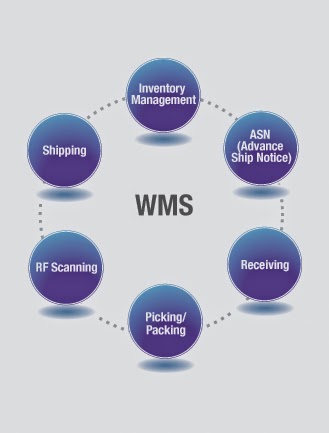
Inside any business that holds inventory on hand for customer orders, you will find a warehouse management system or WMS. In the supply chain, the WMS is vital to the integration of all product stations in the warehouse hierarchy. The progress of product into, through and out of the warehouse is monitored continuously.

Further to this description, the WMS can also apply to numerous levels of warehousing across the distribution model. This can include a central warehouse, any regional warehouses supplied by the central one and possibly retail warehouses that are supplied by the regional warehouses.
The movement of materials and product is tracked and controlled by the WMS. Receipt, storage, shipping and all temporary storage locations are monitored electronically 24 hours a day. All of this information is kept organized in a server based computerized environment that is dedicated to the performance and movement of goods and materials through the use of reporting software.

Many of these WMS systems are integrated as modules of a larger Enterprise Resource Planning solution or ERP. Warehouse management systems may be standalone solutions or may even be custom built software solutions for specific reporting needs. Based on the size and scope of the company, the sophistication of the WMS can be as simple as a handwritten list updated as required or part of a more complex system. Among these are Access based software packages or the more popular Excel spreadsheet systems.

Methods of WMS data collection

Data collection inside a warehouse management system is commonly achieved with AIDC (Automatic Identification and Data Capture) technology. This is a way of storing large amounts of information on individual goods in a very small electronic space. The most recognizable method is the use of a wireless barcode scanner in conjunction with a handheld 2D barcode reader.

AIDC may also use radio frequency identification (RFID), mobile computers or even wireless LANs (local area networks) to track the movement of materials through the ERP or WMS. This data can give a snapshot of any item at any time including the receipt, stocking location, last pick or bin changes associated with that item.

A practical example of a warehouse management system using wireless barcode scanner technology
You may have seen an example of this at your local grocery store. At the checkout, the cashier scans your items. On the back end of that transaction, the store manager can tell what items were sold and assist him/her with a restocking order. The WMS has told them exactly what goods came in, when they were stocked and ultimately purchased.

More information
There is a plethora of information available on this subject. Many WMS companies have embraced the power of social networking through Twitter. Among the best Twitter feeds to follow are @arcweb and @oracle.

Conclusion
The uses of warehouse management systems are all around us. From the grocery store to the car parts dealer on the corner. When you look at items for online purchase, the item information is probably drawn from WMS data residing on that server for your use. Current stock, availability at various locations and pricing are all at your disposal.

Technology is moving at a fast rate now and will eventually be the go to method for all warehouse management activities.Searching for SAP companies in singapore,check the link.

Tuesday, 14 April 2015

Warehouse Management Systems - A Multifaceted Control Tool for Materials

What is a Warehouse Management System?
Inside any business that holds inventory on hand for customer orders, you will find a warehouse management system or WMS. In the supply chain, the WMS is vital to the integration of all product stations in the warehouse hierarchy. The progress of product into, through and out of the warehouse is monitored continuously.
Further to this description, the WMS can also apply to numerous levels of warehousing across the distribution model. This can include a central warehouse, any regional warehouses supplied by the central one and possibly retail warehouses that are supplied by the regional warehouses.

http://www.alenu-it.com/index.php/solutions-a-services/enterprise-resource-planning/sap-business-one-solutions

The movement of materials and product is tracked and controlled by the WMS. Receipt, storage, shipping and all temporary storage locations are monitored electronically 24 hours a day. All of this information is kept organized in a server based computerized environment that is dedicated to the performance and movement of goods and materials through the use of reporting software.
Many of these WMS systems are integrated as modules of a larger Enterprise Resource Planning solution or ERP. Warehouse management systems may be standalone solutions or may even be custom built software solutions for specific reporting needs. Based on the size and scope of the company, the sophistication of the WMS can be as simple as a handwritten list updated as required or part of a more complex system. Among these are Access based software packages or the more popular Excel spreadsheet systems.
Methods of WMS data collection
Data collection inside a warehouse management system is commonly achieved with AIDC (Automatic Identification and Data Capture) technology. This is a way of storing large amounts of information on individual goods in a very small electronic space. The most recognizable method is the use of a wireless barcode scanner in conjunction with a handheld 2D barcode reader.
AIDC may also use radio frequency identification (RFID), mobile computers or even wireless LANs (local area networks) to track the movement of materials through the ERP or WMS. This data can give a snapshot of any item at any time including the receipt, stocking location, last pick or bin changes associated with that item.
A practical example of a warehouse management system using wireless barcode scanner technology
You may have seen an example of this at your local grocery store. At the checkout, the cashier scans your items. On the back end of that transaction, the store manager can tell what items were sold and assist him/her with a restocking order. The WMS has told them exactly what goods came in, when they were stocked and ultimately purchased.
Conclusion
The uses of warehouse management systems are all around us. From the grocery store to the car parts dealer on the corner. When you look at items for online purchase, the item information is probably drawn from WMS data residing on that server for your use. Current stock, availability at various locations and pricing are all at your disposal.
Technology is moving at a fast rate now and will eventually be the go to method for all warehouse management activities.